miércoles, 3 de diciembre de 2014

The Walking Dead gave me Goosebumps: A study of narrative in simple gameplay


Have you ever played a game that was so engaging that you forgot you even existed and drooled over it, not even noticing that they were telling you a story? Have you watched a movie, or read a book, so appealing that the hours passed by without you even noticing? 

Telltale's The Walking Dead is nothing like that. It is a futile attempt of both. I believe that The Walking Dead is an interesting experience that provides extensive evidence of everything that is wrong with narrative in videogames.

Mechanics

In The Walking Dead the player has a limited range of exploration, giving the character the power to choose between specific pre-set dialogs with characters, this will make the player feel like he has a control of the outcome of the game, when in reality all that the player can control is the character's emotions toward other characters and minor story twists, leaving the stoty linear with the begging, climax and closure of each chapter the same no matter what choices were made by the player.


Playing this game, for me, felt much like watching a very good episode of The Walking Dead, having annoying pauses where I was supposed to press buttons for the story to go on. 

When I was a child, I loved R.L. Stine's Goosebumps book series and my parents would go to any extent in buying me whatever special, weird collection there was of Goosebumps. There was one of these Special collections that I particularly loved which was called Give yourself Goosebumps.

In Give Yourself Goosebumps, the reader would read a few chapters and then be faced with a choice that would affect the story. If, for instance the character (which was intended to be the reader himself) was locked in a medieval castle with a madman who had an axe (Return to Terror Tower), the reader could choose if he wanted to go through a door or pick up a sword, the story and outcome would change with each reader choice, and there was one (or a few) combination(s) that could save the reader's character and get him out of the tower. The rest would end up killing him, slaving him, transforming him, turning him into a living dead, in other words: Game Over.


In many ways, the Give Yourself Goosebumps series is more than a game to me than The Walking Dead Game Series will ever hope to be. And I will explain why.

Narrative Structure

Even though games are considered to have non-linear stories (meaning that the events will not happen at the exact same time, the exact same way every time the player plays), the narrative itself can be linear. A game that has a story that never changes, no matter how many times we play it, has a linear narrative. The Last of Us, Super Mario Bros, Dead Space are examples of games that have linear narrative, no matter what the player does or how he does it, every time that the player talks about the story of the game he will do it in exactly the same way, because it remains exactly the same.

For games with linear narrative to be succesful they need to have a compelling gameplay. Monkey Island is a narrative based point and click adventure game with a linear narrative but an enganginly challenging gameplay. 


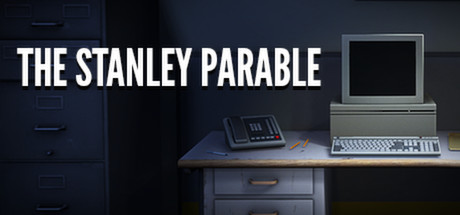
If the gameplay is not as interesting and the Game Designer feels the need to add a compelling story, it would be best is the narrative is non linear, meaning that no matters how the game can be played, it can be "won" or "lost" by having different endings, even having a few fun or crazy ones would be cool. The Stanley Parable explores this concept marvelously, having so many different endings (and only one that can be considered as a win for the character) makes the player forget the dullness hidden behind the game mechanics and creates a completely engaging experience (more on The Stanley Parable in an upcoming post).

In The Walking Dead game, the gameplay is mindless and dull, and the narrative is enjoyable, but slow and linear, the choices of the player don't seem to matter much when looking at the main narrative, so the player has a narrow control over every aspect of the game, including the fate of his character.

In Give Yourself Goosebumps, the gameplay is also mindless and dull (challenge-wise speaking of course, I love reading) the reader / player just has to read and make choices, however the narrative is interesting and completely engaging, taking the reader's choice into account in the story's events and having only one "winning" ending. The player is in complete control over what happens to his character.

Technically Speaking...

According to Raph Koster in his book A theory of fun for game design: "Playing a game is the act of solving statistically varied challenge situations presented by an opponent who may or may not be algorithmic within a framework that is a defined systemic model" This not only means that there are seemingly un-gamey things that aren't games, it also means that there are seemingly gamey things that aren't!


In The Walking Dead the Player:

Solves statistically challenge situations: however they aren't really varied, all important game challenges are moral ones, the player gets used to this and dismisses the "challenge-factor" quickly without a goal that can change depending on his challenge solving abilities. This means that it is fairly obvious to the player that whichever events he thinks that he can change when making decisions won't change, so that the player has no control over the main events of the game, which are narrative driven,

The challenges are presented by an opponent: The opponents are the story enhanced moral values (of the kind: Will you save a child or your grandfather? Will you shoot your loved friend or will you let her kill you all with her decisions?) and this is done wonderfully.

Is playing in a semi-systemic model: Let's understand first what a Systemic Model is. A Systemic Model is a fictional universe in which upon affecting its main components, the rest of the components are also affected, as a goup, as opposed to individually affecting each element without relating to the others. Considering that in The Walking Dead the main feature is the story, and considering that the choices the player makes won't affect the story outcome at all, but they will affect minor narratives inside the main storyline, it can be interpreted as if The Walking Dead is a semi-systemic model.


In Give Yourself Goosebumps, the reader:

Solves statistically varied challenge situatons: In this case the challenges affect the outcome of the story and the winning condition (non existent in The Walking Dead), and the reader has to analyze what possible outcomes may his decisions trigger.

The challenges are presented by an opponent: The opponent being the adverse environment in which the reader's character lives. 

Plays a systemic model: Being the character's fate the main element of the book, the character has complete control over said fate. The choices that the reader makes are completely related to the story's consequences. The complete story reacts as a group when each choice is made.

Games will be games

After this analysis and according to my perception of gaming, there is a jaw dropping conclusion:

Players who play The Walking Dead are not really playing a game, they are witnessing a story (like what we do when we watch a movie), and they aren't players, they are witnesses. 

Readers who read Give Yourself Goosebumps are also players who play a game. 


martes, 2 de diciembre de 2014

Game Testing 101: The Basics


So, you want to be a Game Tester? Or perhaps you are already one, but want to share your experiences and see others'? Game Testing is a perfect way of entering the Game Industry. Being "paid to play games" is every child's dream. 

Celebrating #TestingTuesday I will post, each Tuesday, a guide toTest Games, with the hopes that I can help others like me get in this beatuiful business and expand their careers towards the path of their choice.

Why me?

Who am I and why should you be taking advice from a random girl with a blog? I currently work at a growing videogame studio called TeravisionGames as QA Lead, I've been in this role for most part of the past 2 years.

During my adventures in the videogame industry I've been a programmer, an associate producer, a tester and a QA Lead. I've tried to find information everywhere about Game Testing but it has been either too advanced or too specific, so I have come to develop a guide for our testers which has worked very well and has given them fairly quickly a critical-testing eye.

So stick with me and I'll open your eyes to the wonders of game testing.

What's Testing?

Videogame testing is a very important part of the game development process, it is the component that analyzes whether the game is ready to be shipped or not. It provides the development process with a critical eye in constant search of mistakes, incosistencies, gameplay coherence and feature completness. Game Testing is methodical attention to detail applied to finding mistakes and incoherences in a game.

Without game testers, there would be a high probability that the end user (a.k.a. Mr. Player) would find himself buying a copy of Shadow of Mordor with a crash starting the game which would make the game close and stop working before the player's very eyes.


Preliminaries

The process of videogame production can be compared to the process of construction of a building. 

First, we have the blueprints which are designed by architects and supevised by engineers, this first constuction phase can be compared to the pre-Alpha, where the Game Designers build a Game Design Document (the blueprints of the game). Then everyone starts building the foundation, so that you can se the complete structure of the building, you know how tall is each floor, but you don't know what colors will the wall be, this is similar to the Alpha phase of the Game development process, in which you have a vertical slice of the game with the basic game mechanics, but you don't have every level of the game, or every character. After this the building may be completely built, appartments and all, but the final installations will surely be missing, there will be no doors, the kitchen may be halfway and everything is dirty, this is a Beta, a Beta is basically the most heavily testable game phase, in which all the features are in and some final polishing and debugging is in order. When the game is done and ready to be published it is called a Gold build.

As a tester, you need to know how to set up your testing environment to test the game in each of its stages, don't get ready to test final art in an Alpha release, instead focus on the mechanics (the rules of the game). You also need to set up your target platform(s): PS4, PS3, Nintendo, PC, Mac, Xbox, iPad, Samsung Galaxy S5, the list goes on and on. If a multiplayer testing is needed, you need to have the right amount of people, if a resolution testing is needed, you may need available resolution displays, and so on.

What should I Test?

Considering that each game is unique and its testing phases may vary, the testing reports can be enclosed in four big categories (we will be talking about each one of these categories in an upcoming post):

Gameplay and Mechanics: In this category, we basically need to test that every game rule (mechanic) is correctly implemented, every enemy, every level, every control movement or the difficulty (balancing).This includes every game behavior. 

If Mario should jumo when the user presses A (a game mechanic for Super Mario Bros), does it jump when I press A? What if I press B? What if I press A and B at the same time? Are the rules well implementes? Does it have the correct amount of levels? Are the enemies well balanced? This is such a broad category that it naturally splits into several subcategories, we will be looking at this in much more detail in an upcoming #TestingTuesday

Art: Basically in this category we need to test every art-related item. Whether if it is Visual FX, 3D models, environment, 2D art, everything needs to be in the game, with the correct resolution, in the correct place, and everything must maintain a similar art style.

 Are all the animations OK (not jumpy but fluid)? Is something or someone missing an animation? Are we having an excess of animations? Is the art coherent? Does it match the game IP? Are the 3D models within the correct triangle count? Are all the art assets in the correct resolution(s)? 

Interface: Game systems are a constant communication between Game and Player, if player does one thing, game reacts in such way. Without tis feedback, there would be no game at all, think of how unsatisfying it would be to kill an enemy and hit it multiple times and just watch him take the hits with no reaction, how would you know that you hurt him? The game is basically in need of an initerface. Interface is the language that we give to our game to talk with the player. Specially in consideration when testing Interface is the Heads-up display (HUD), all the elements that we need our game to show our player in a first plane (score, buttons, health...)

Are the buttons in the right size? Are the elements following the right hierarchy? Is the information show enough? Is the information showed too much? Do we need to add a pop up (for instance: No internet conection pop up).

Music and Sound FX: This category specifically relates to all in game music (such as environment music, songs that the character plays, character themes, and so on) and the SFX: Footsteps, explosions, gunshots, landing sound, wind sound, and so on.

Is all the music needed ingame? Are all the SFX needed implemented? Are there some SFX too much? Do the music and SFX have the correct level? Is the music and SFX consistent with the IP?

Upcoming in the Next #TestingTuesday

We learned the basics about a Game Development Porcess and saw an overview of the Game Testing categories. 

In the next #TestdayTuesday we will be seeing how we should test and report, different methods and process that will adapt to all games out there in any of their development phases and that will make our testing more efficient and our results more relevant.


lunes, 1 de diciembre de 2014

#Random Madness steam codes giveaway

This December brings laughter, joy, GamerGate debates and Madness.


Starting today and in random days of December I will be giving away 7 steam codes, just because. Buckle up!

The first Steam Code gift for Pixeljunk Shooter:


Enjoy! And Stay tuned for the next #RandomMadness giveaway within this week!

Follow me @The9BitGame

sábado, 29 de noviembre de 2014

Blug Edition: The Top 5 Bugs of the Week

This satuday is the First Blug Edition, featuring Android Gaming with good old bugs in good old games!

1. Subway Surfers' 3D Mishap

Subway Surfers has been known for having 3D related bugs in the past, and this week they were not the exception. Wrapped under the Myster yBox is a Guitar Model trying to get free.

Most players wouldn't stand the suspense of not knowing what's in there.


2. Machinarium's Little Grammar Bug


We can all make mistakes in any game development process, even in Machinarium!

A tiny Grammar Mistake lies waiting in the File Saving page. Yes, I'd like to Overwite that please!


3. Fruit Ninja Button Attempt


Fruit Ninja developers seem to have slipped a little bit of code into what was supposed to be a button I guess...

At least we get a glimpse of that code.


4. Temple Run's Unfitting Mistake


The buttons are too big for this screen... Or is it the screen that's too small for these buttons.

Anyway, It seems that the Tweet, Store and More Coins buttons are not fitting on this screen!


5.  Fieldrunners Black Bug


Fieldrunners' studio has already started working towards this fix. Can't zoom in to place weapons without the complete screen going like this. Whatever this is.


Tested in Samsung Galaxy Note 3. More Blug Editions coming soon!


jueves, 27 de noviembre de 2014

The Last of Us: Bringing Balance to the Force?


The Last of Us was one of those games that I just couldn't wait to get my hands on. Having played for all my life and being particularly partial toward indie games as I am, I had hoped that The Last of Us would finally revolutionize the AAA industry to give some space for creativity and innovation. It didn't.

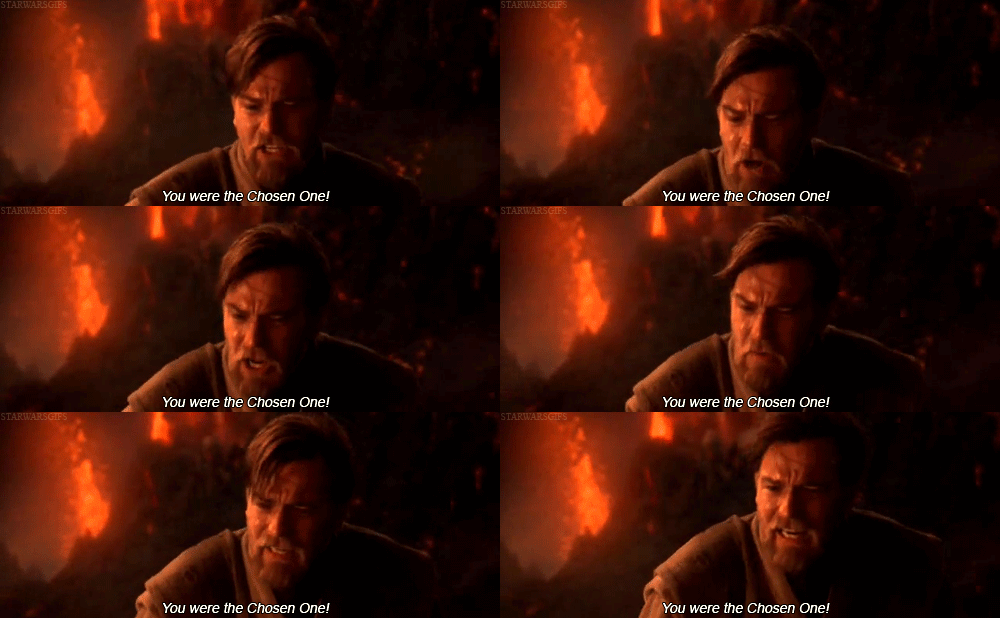
As much as I believe that the game derseves all the awards that it has won so far since it is as amazing as it is beautiful, it wasn't a game changer for me, and I really thought it would be The Chosen One. Hasn't anyone felt as if the gameplay of most AAA games feels too much the same? No matter the genre, the designers tend to go back to the old cliches and scorch creativity for the sake of  playing it safe and selling copies (that's a great motivation, though).

It's not that they should reinvent the wheel with every game they make. This would be a mistake, taking advantage of what history has taught players is a must for all successful games, but there's a thin line between using the past to one's advantage and blinding oneself to new possibilities just for sticking to what one already knows.

Maybe I'm a hopeless romantic, but we hopeless romantics want to play AAA games too and feel like we're playing a new game, not the same game over and over again with a slightly or dramatically different story.

Same old, same old?

The Last of Us is, as those who have been lucky enough to play it know, an Action-Adventure, Survival-horror game with Third Person Shooter and Stealth tints. There are many games that belong to this or to a similar genre, which are the parents, grandparents and cousins of The Last of Us. Let's take a look at some main mechanics behind some of them.

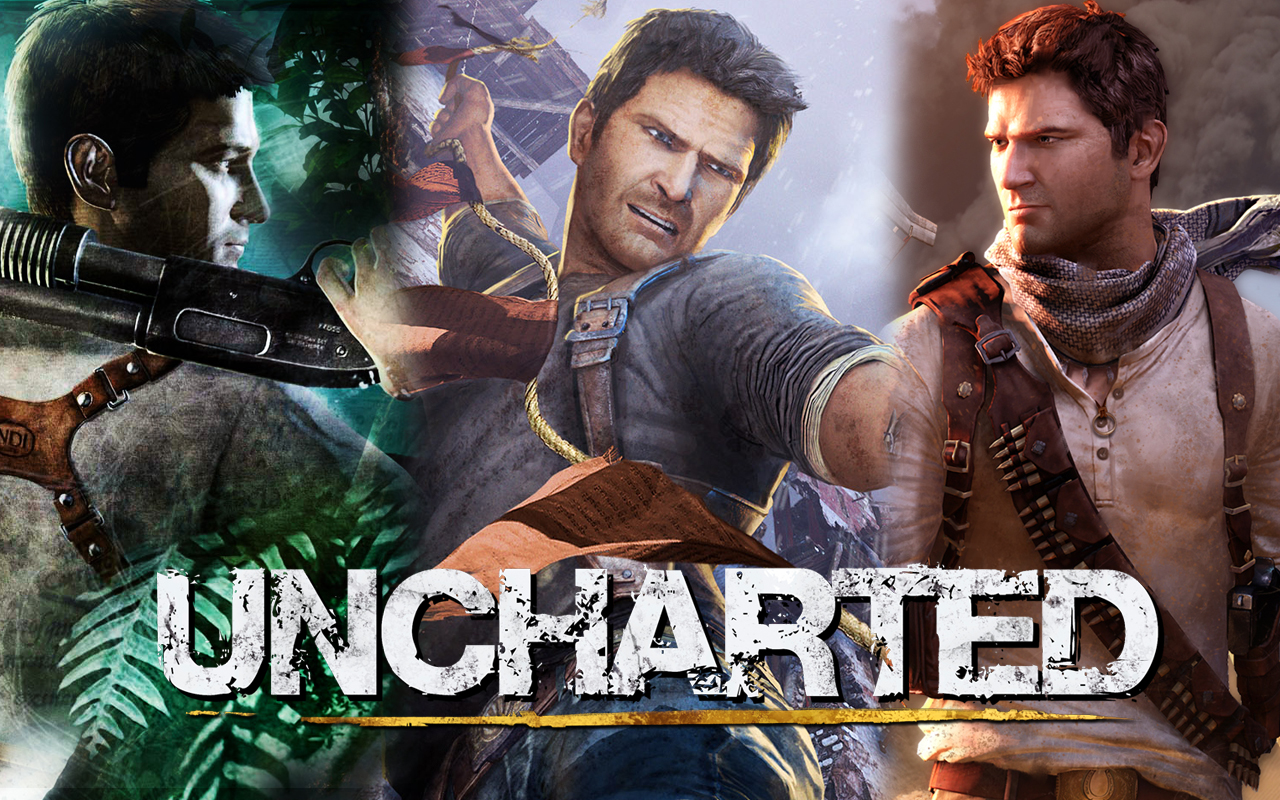
Uncharted Series: Also developed by Naughty Dog, this seems like a logical place to start. Stripping this game out of the narrative context gives us a glance at the main mechanics. Keeping in mind that even though the narrative is a basic and important part of the game, let's stick with trying to forget about it and look at the engines of the mechanics.

Third person shooting: Player goes around killing enemies with guns found in-game. A typical point and shoot game, taking cover behind obstacles, peeking to kill enemies, the whole set.

Stealth: Some game moments are so plagued with enemies that the player might want to take cover and sneak behind them to kill them in silence, so that he doesn't warn other enemies of his presence, the player would normally walk slowly, and when he's close enough to one nasty enemy, typically the player would press the right button at the right time and watch his character silently kill the opponent. 

Puzzle-solving: puzzle-solving in this game is fut but unchallenging. Is there a higher ground that the character needs to reach? Just give your partner a lift, or look aound for ladders. There are other things like completing images, pushing heavy doors in group, and similar tasks.

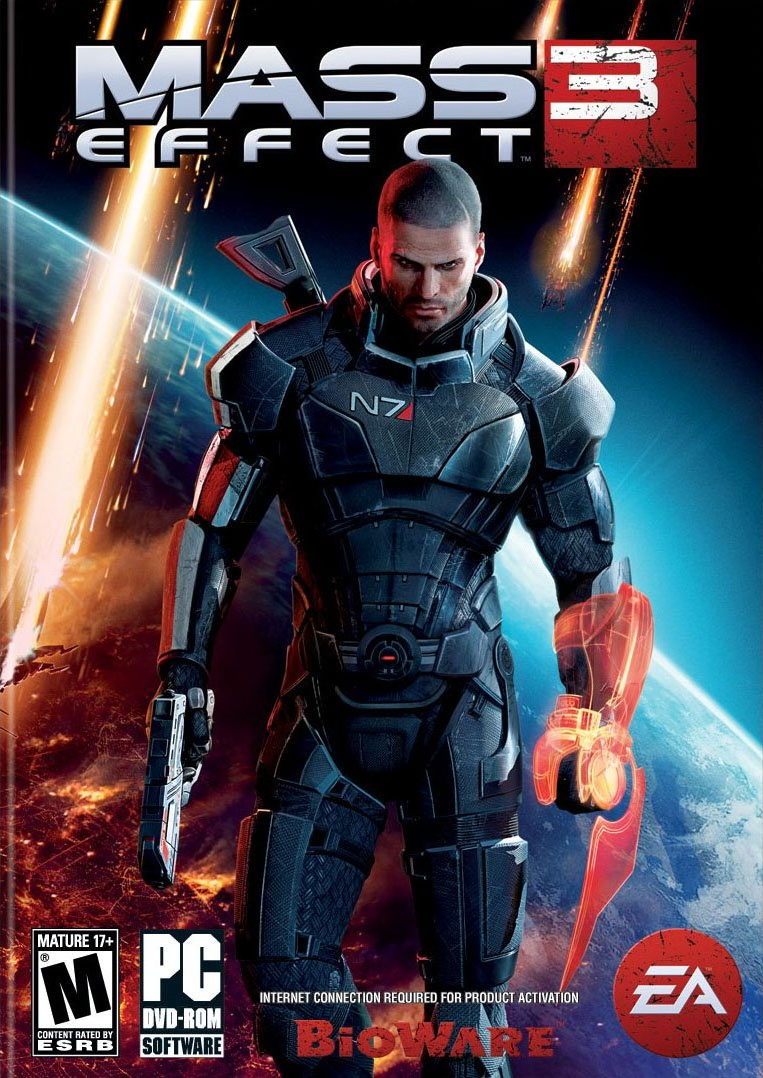
Mass Effect 3: I love the story behind the Mass Effect series, and the RPG-ish feeling the player gets while playing it, but again, let's forget about this game's narrative content and take a closer look at the bare main mechanics. 

Third Person Shooting: Player goes around killing enemies with guns found in-game. A typical point and shoot game, taking cover behind obstacles, peeking to kill enemies, the whole set.

Weapon Upgrading: The weapons that the character gets in the begining of the game might not be enough to bear with the progressively increasing difficulty, so the player would want to upgrade them in specific locations.

Dead Space Series: I also like these games very much, a clever Survival Horror which broke my controls when I dropped them to the floor out of pure fright. Looking at some main mechanics:

Third Person Shooting: Player goes aroung killing enemies with guns found in-game. A typical point and shoot game, although this time peeking behind obstacles might get your character killed once the enemy has spotted him.


Weapon Upgrading: The weapons that the character gets in the begining might again not be enough to bear with the progressively increasing difficulty, so the player would want to upgrade them in specific locations.
  
All these mechanics are pretty cool and pretty standard, well polished they can be amazing, and wrapped in a interesting narrative they can be enhanced. However if we compare these to the main mechanics of the Last of Us we won't find much difference.

The Last of Us: Some main mechanics of The Last of Us might sound familiar:

Third Person Shooting: Player goes around killing enemies with weapons found ingame. A typical point and shoot game, taking cover behind obstacles, peeking to kill enemies, the whole set.

Weapon Upgrading: The weapons that the character gets in the begining of the game might not be enough to bear with the progressively increasing difficulty, so the player would want to upgrade them in specific locations.

Stealth: Some parts are so plagued with enemies that they player might want to take cover and sneak behind them to kill them in silence, so that he doesn't warn other enemies of his presence, the player would normally want to walk slowly, and when he's close enough to one nasty enemy press the right button at the right time and watch his character silently kill the opponent. 

Puzzle-solving: puzzle-solving in this game is fut but unchallenging. Is there a high ground place that the character needs to reach? Just give your partner a lift, or look aound for ladders. There are other things like pushing heavy doors in group, and similar tasks.

Mechanics vs Story

I have a tendency to favor mechanics, although games can serve as a narrative medium if well implemented. I believe that if they have to choose, developers should choose a mechanic-driven game instead of story dirven one, not sacrificing the quality and innovation of the mechanics over a compelling plot with amazing graphics.

If someone asked me what The Last of Us was about, I'd say that it's about a post apocaliptyc world in which a man with little faith in humanity gets caught up in a standard hero's journey. If you asked me what Braid was about I'd say that it's about a character filled with regret that can manipulate time (without the whole metaphoric content).

This is an exercise that I like very much, because it helps us differentiate (subjectively to each player, although with generalizable tendencies) what the game is really made of, story, mechanics or both. In the Last of Us example I would only talk about the story, because the mechanics are serving as a means to tell this story and are left in a second plane, if we were talking about Braid, I'd talk about both, because story and mechanics are so carefully balanced that one can't live without the other. If we were talking for instance about Tetris, I'd talk only about mechanics, no story, so it's a game about organizing blocks without leaving open spaces. See the difference? More on this in an upcoming post.

As I said, this depends on the type of gamer, but I've come to see how most AAA games are story-driven and how most indie games are either well-balanced or mechanics-driven. Since for me gaming is about playing games, not watching animation sequences, I would very much rather play an indie game instead of a AAA one, of couse I'm generalizing, I'm talking about tendencies.

What left me so disappointed in The Last of Us was that I was expecting the inflection point for AAA gaming, to me, this was the game that was going to change this generalized perception, which would beautifully balance story and mechanics, innovating on the latter to complement the first. But the  mechanics with its few small innovations were so unbalanced in significance compared to the awesomeness of the plot that I felt like rushing through the game to see what happened, as if I was watching a movie, instead of enjoying the gameplay moments. It didn't change my perception about the AAA industry being each day more about great graphics and solid stories and less about quality gameplay and innovative mechanics, it enhanced it!

I would lie if I said that I didn't enjoy playing The Last of Us, I enjoyed it very much, just not as much as I enjoyed playing The Stanley Parable, Thomas was Alone (funny enough, story-driven games for me), Braid or Limbo. To me, The Last of Us was the Chosen One who would bring balance to the force, instead of widening the gap.

I'll keep waiting for that massively popular AAA game that everyone will play and that will be an eye opener, game changing, force balancing event. For now, I'm sticking with indie games and the few balanced or mechanic-driven AAA games.

miércoles, 26 de noviembre de 2014

Videogames are Art's Second Cousin Twice Removed

There's been a lot of debate about whether videogames are art or not. Then again, there's been a lot of debate about whether art is art or not, so buckle up! This can get philosophical.


Humans feel the constant need of communication, and videogames are a form of communicating with the weird world living outside the developer's minds. Going deeper, there are games that have succesfully achieved the subtle ways of storytelling (more on games and storytelling in an upcoming post). So, if a novel is considered art, why shouldn't a videogame be considered art as well?

There are people who say videogames should even have a museum, there are other people that feel like videogames are as close to art as a white canvas in a pretty frame, which, considering the standarrds of modern art, is pretty close.

I believe that videogames can be art, or not, depending on the feelings that they convey on the player. I can't think of a videogame such as Braid not being considered a form of art, which is why I honestly believe that videogames are art's second cousin twice removed. They are definetly younger than other forms of art, and they have definetly artistic potential, so they sure are family.

What does it take for a videogame to be considered art?


It's not about the pretty graphics, or the pretty sounds... it's about the complete experience, it's about having that precious feeling of wonder while you play the game, at all times, even though the game might convey other additional feelings. Here's a list of 3 videogames that I consider pure art and the reasons why.


Braid: The atmosphere that Braid creates is dense with metaphores and intense feelings of loss and regret. The player almost doesn't want Braid to end, the whole experience is so subtle and yet so strong that he can't help but feel satisfied and overwhelmed at the same time. Braid provides a well balanced combination of music, art, storylines (all art forms), and best of all, it allows the player to be a part of it. 


Limbo: Another atmosphere game, however this case is so less obvious than Braid to many people because of the graphics being so simplistic. Limbo empowers the concept of minimalism with (get this) not a very audible music and not very elaborate graphics (huh?) Limbo is not about flashing awesome things at the player, but about hiding awesome things from the player. The feelings of dispair and fear of the unknown are intensified by blinding and deafing the player, the mechanics are neat and the complete experience is so immersive that the average player flinches with every Game Over. Many paintors have tried to achieve these same feelings in their audience to no avail, and Limbo manages it while keeping the player with a genuine sense of wonder and avid for more.


Thomas was Alone: One of my favorite games, Thomas was Alone is narrative done right. It transmits a powerful artistic feeling similar to the feeling one may experience after reading a life-changing, paradigm-shifting book, so why wouldn't it be considered art? The player is led to believe that he's playing a game, when he's actually reading a story, with game rules, again, something only games can provide.

Braid mainly gives the player a feeling similar to the one he might feel by watching a great painting while listening to empowering music, Limbo mainly makes the player feel like part of a minimalistic work of art and Thomas was Alone mainly makes the player feel part of an amazing story. All these have one thing in common, they not only throw art at the player, they also make the player be a part of that through immersion.

Games are unique because they can mix some great music, great graphics and amazing stories and reinforce all this with a solid and coherent gameplay to invite the player to get in and be an active part of the whole thing. Which painting have you seen that can do that?

Why are some videogames not considered art?


Not all videogames have artistic qualities and make the player feel like he's reading the most beatuiful of poems, so here are 3 un-artistic videogames.


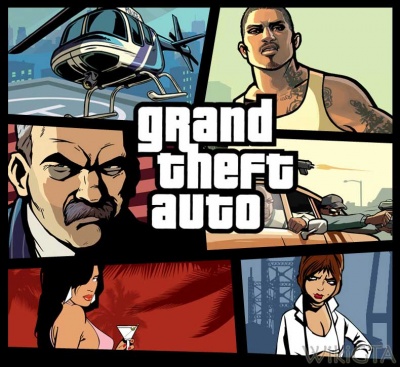
Grand Theft Auto: Robbing cars and wrecking cities, however artistic it may sound, ruins the atmosphere. This game has it all: good graphics, good music, cool mechanics, but they somehow don't interact between one another in harmony, making the player feel that he has a rather boring life. The feeling of wonder at the message of the game gets lost between all the complexity and roughness of the mechanics. To me, the greatest feeling that this game conveys is the feeling of cash falling out of your wallet.


Wii Sports: Being a fan of all things Nintendo I must admit that some titles lack that artistic component, Wii Sports is one of them. This game makes the player feel like being at a sports playfield listening to the music of a doctor's waiting room, it's meant to be more of a sport activity than a gallery-sightseeing activity. Since art is such a personal thing that speaks differently to each one of us, it's more difficult for multiplayer oriented games like this to convey art, so sometimes they don't even try to. 


Angry Video Game Nerd Adventures: This is a very fun un-artistic satire. It is made as a cult to the history of gaming, regarding gaming as the classic, geeky, frustrating experience that stuck after the 8-bit consoles went in business. Although the graphics are fun to watch, the humor is hilarious and the gameplay is marvelously frustrating, this game feels to me like whatever fun feelings I get when I watch Saturday Night Life.

Not all games are art, and that's all right, because not all games are meant to be. Each game has its own unique purpose and not all the developer's need to connect at such a deep level to make a great game. What's true is that all games have the potential to become art, because they are family.


lunes, 24 de noviembre de 2014

Being a woman in the videogame industry


Almost everybody has been hit by a certain series of happenings which we've come to call GamerGate. Thanks to GamerGate a lot of the old "women in gaming" debate has been sadly undusted.

Let me clear this out: Being a woman in the videogame industry is not a big deal. 

I have not been frowned upon, nobody has thought less of me, I have encountered no special obstacles whatsoever, sorry to disappoint you. So what's the deal with people who think women are more or less just because.

For me the saddest moment in the whole discrimination issue was when I was at GDC back in 2012. Everything was going wonderfully according to plan, I had met a lot of interesting people and even managed to make a few friends. And there I was, in the San Francisco cold post-winter winds, when I saw a large line forming to enter an event. This event was called: "Women in Gaming". And almost everyone on the line was, well, women....

For me, the discrimination is self inflicted, and the whole thing is ridicoulous, by being overly victimized or extremely feminist, women have drawn the line and have insisted that there is a difference, fighting to vanquish what's not vanquishable, because it is not existent.

It's true that we have both genetic and history to blame for our lack of participation in this industry a few years back, but that is not so right now. Even if we were engineered to think about raising families and worry about keeping the house clean, these are clearly stereotypes which aren't really true today.

Throughout my life, I've been called a tomboy because I like games... by women! As if games were a specific asset for men, and women who took part in this were weirdoes. 

I wouldn't put myself in a special place just because I'm a woman, I won't recognize any event, comment, hashtag that separates me from the rest just because I'm a woman, no matter if that separation puts me below or over men. 

So I'm sorry to dissappoint everyone, but GamerGate is not really about gender inequality, it's about people who can't manage their personal lives and who think that everyone should be involved in what is clearly not of public interest.

The day the self-inflicted discrimination ends will be the day that women stop calling each other tomboys for liking games, and stop going to events called "Women in Gaming", unless of course, there is a parallel event of equal importance called "Men in Gaming".

Even more, many people have come to ask me how did I manage to enter in the videogame industry being a woman. I have to supress my eyes from rolling as I answer "Just like if I were a dude".

So women, don't be discouraged, there's nothing to fear, this industry is big enough for women and men, and we all would live happily if it weren't for the auto discrimination some women veterans are inflicting upon ourselves, and very publicly so.

You can also find this article in Destructoid: http://www.destructoid.com/blogs/The9BitGame/being-a-woman-in-the-videogame-industry-284237.phtml